 Design Slices
Build guide · 9 min read
WordPress vs custom vs marketing site: which fits which business?
Three build types, three different jobs. How to choose based on who edits the site, what it sells, and where the traffic comes from.
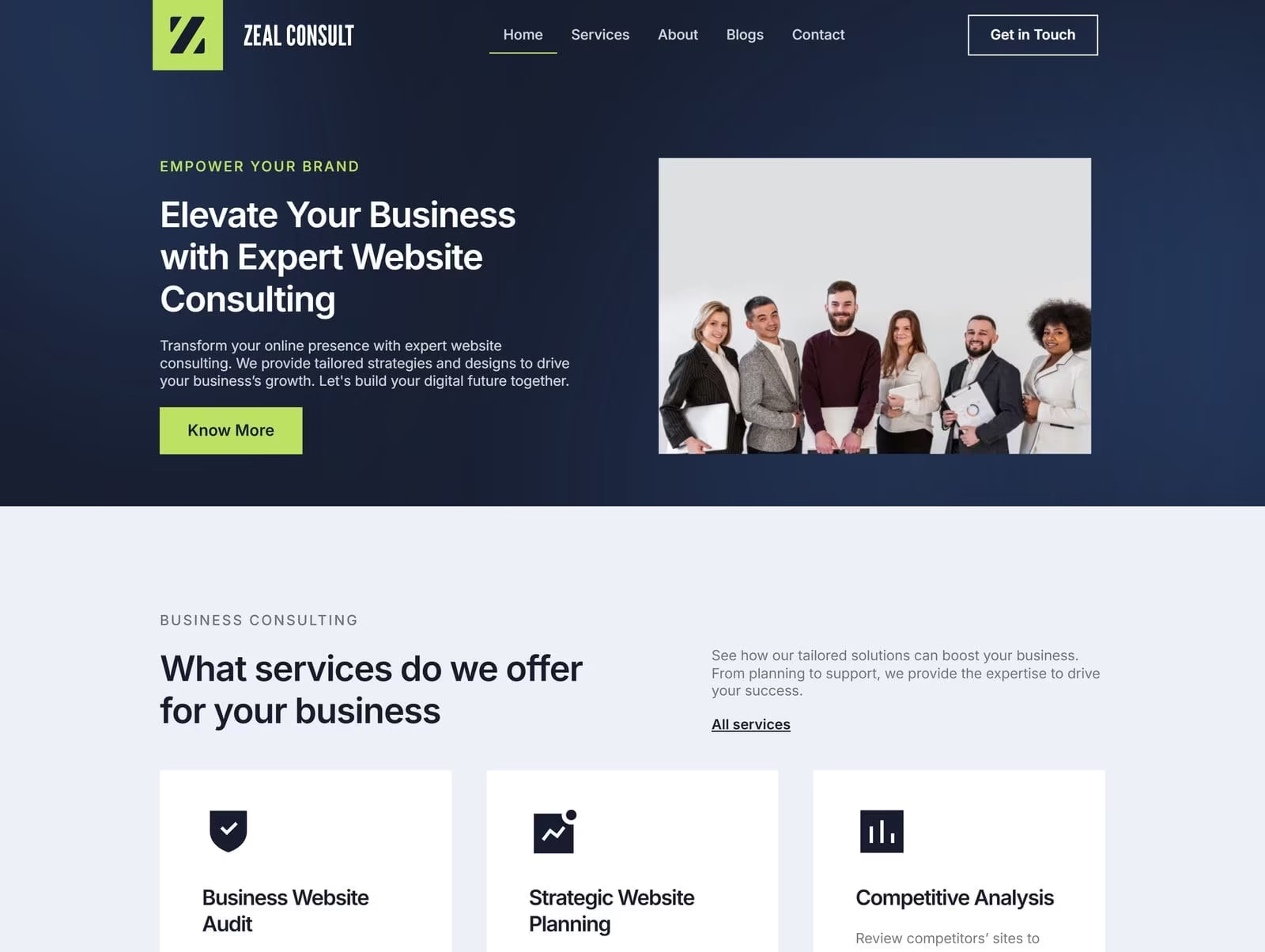
The one-minute answer
WordPress, a marketing site and a custom build are not three quality tiers. They are three ways to solve different problems.
| Build | Best for | Editing | From AED |
|---|---|---|---|
| WordPress | Content-heavy sites, blogs, brochure sites and smaller shops | You edit in the WordPress admin | 500 |
| Marketing site | One offer, campaign traffic and lead generation | Developer or lightweight CMS | 500 |
| Custom | Apps, dashboards, portals, integrations and complex commerce | Bespoke admin, if needed | Scoped |
The rest of this guide is the reasoning behind the table, with the cases where each option stops fitting.
Start with three questions, not a platform
Most platform debates start in the wrong place. Before comparing features, answer these:
- Who updates the site after launch? You, a team member, a freelance editor or a developer?
- What does the site have to do? Publish, sell, capture leads, book appointments, log users in, connect to internal systems?
- How will people arrive? Search, paid ads, social, referrals, email or direct?
The answers usually point to one build type before the feature list does. A site that nobody edits and that exists to convert ad traffic does not need a complex CMS. A site with three editors publishing weekly does.
There is also a budget question, but it is less useful than it looks. A AED 500 site that fits the job is better value than a AED 1,500 site that solves a problem you do not have yet.
WordPress: when content is the product
WordPress is the default for a reason. It gives non-technical teams a familiar admin, a huge plugin ecosystem and a clear path from a brochure site to a blog or a small shop.
It fits when:
- You publish articles, guides, news or resources regularly.
- Several people need to edit content without touching code.
- You want to manage products in a familiar admin with WooCommerce.
- You need standard integrations such as forms, SEO, bookings or email marketing.
- You want a lower upfront cost and a wide choice of developers.
The trade-offs are real. Plugins need updates, and every plugin is another surface to secure and maintain. Page builders can make editing easy and the front end heavy. A WordPress site is not slow by default; a stack of conflicting plugins, an overloaded theme and cheap hosting make it slow.
The fix is discipline: a custom theme or a lean block theme, a short plugin list, managed hosting and a maintenance routine. That is the version of WordPress we build — a tailored front end with an editor-friendly admin, not a theme with the logo swapped. See WordPress websites.
A marketing site: when one page has one job
A marketing site is built around a single commercial job: explain an offer, build trust and move the visitor to enquire, book or buy. It is usually a small number of carefully composed pages rather than a publishing platform.
It fits when:
- You have one core offer or a small set of services.
- Traffic comes from ads, launches, outbound or referrals, and the page has to convert quickly.
- Speed, motion and message hierarchy matter more than a large content library.
- You can plan the site around a campaign or a launch date.
- You do not need to publish new pages every week.
The trade-off is editing. A static marketing site is fast and controlled, but structural changes usually go through a developer. If the team needs to publish constantly, add a lightweight CMS or choose WordPress instead. If the site changes a few times a year, the performance and design control are worth more than a familiar admin.
This is the build for a focused launch, a paid campaign or a service business with a clear offer. See marketing websites.
A custom build: when the website is the business
A custom build makes sense when the website has to do something that no standard platform does well: user accounts, dashboards, quoting engines, booking logic, multi-vendor commerce, or a connection to an ERP, CRM or internal database.
It fits when:
- Users log in and see different data or tools.
- The buying process has rules that a standard checkout cannot express.
- The site has to connect to systems that already run the business.
- Performance, security or scale are core requirements, not nice-to-haves.
- The website is part of the product, not just a brochure for it.
The trade-offs are upfront cost, a longer timeline and the need for a clear specification. Custom work also needs a maintenance plan: dependencies change, APIs evolve and browsers move. The upside is that the site can be shaped around the business instead of the business being reshaped around a plugin.
A custom storefront starts at AED 1,500 in our pricing, with the final quote scoped to the catalogue, integrations and checkout. Application work is quoted separately. See custom websites and e-commerce websites.
The same business at three stages
A concrete example makes the decision easier. Imagine a personal trainer in Dubai with a growing client base.
Stage one: prove the offer. A AED 500 marketing site with the training philosophy, packages, testimonials, schedule and a WhatsApp or contact form. The goal is credibility and enquiries, not a member area. A portfolio or marketing site is enough.
Stage two: publish and book. The trainer starts writing training guides and needs clients to book sessions. WordPress with a booking plugin, or a marketing site with a lightweight CMS and a booking integration, handles both without a custom platform.
Stage three: run the business online. Clients need accounts, monthly plans, class credits, payment history and cancellations. That is a custom build: authentication, subscriptions, booking rules and an admin for the trainer. The website is now part of the operation.
The mistake is buying stage three at stage one. The second mistake is staying on stage one when the business has clearly moved to stage two.
Where each one breaks
| Build | It starts to break when… | What to do instead |
|---|---|---|
| WordPress | The plugin stack is doing the work of an application, or nobody is maintaining it. | Simplify the stack, or move the custom logic into a custom build. |
| Marketing site | The team needs to publish weekly, or the catalogue grows beyond a handful of products. | Add a CMS, move to WordPress, or build a proper store. |
| Custom | The requirement is a five-page brochure site with a small budget. | Use WordPress or a marketing site; custom is overkill. |
A useful warning sign: if you are describing the website as “like X, but with one small change”, you are probably forcing a standard platform to behave like a custom one. That is when the plugin bills and the workarounds start.
The hybrid options
The choice is not always either/or. Most of our projects sit between the labels:
- Custom WordPress. A bespoke front end and editor experience on WordPress. You get the admin your team knows without a template look.
- Marketing site with a CMS. A fast, campaign-led front end with a lightweight content source for the pages you update often.
- WooCommerce with custom checkout. Standard product management, with bespoke rules or a custom checkout step where the default flow fails.
- Custom front end, WordPress content. The publishing workflow stays familiar while the public site gets the performance and design control of a custom build.
The right hybrid is the one that keeps the editing workflow simple and the public site fast. If a hybrid adds two systems and a sync job for a five-page site, it is not a shortcut.
How to decide in 15 minutes
Run through these in order and stop at the first one that matches:
- Do users log in, see different data or perform a workflow? → Custom.
- Do you need to sell products and manage them yourself, with standard variants and shipping? → WooCommerce.
- Do you need a large or unusual catalogue, complex checkout or deep integrations? → Custom e-commerce.
- Does your team need to publish or edit content every week without a developer? → WordPress.
- Is the site built around one offer and paid or campaign traffic? → Marketing site.
- Is this a personal site whose main job is to show work? → Portfolio.
- Still unsure? → Start with the smallest build that can prove the offer, and plan the upgrade.
Write the answer down with the date. It is easier to revisit a decision when you can see what you knew at the time.
What to ask before you choose
- Who owns the domain, hosting, code and design files?
- What does maintenance cost, and what happens if I stop paying it?
- How do I edit the site, and what training is included?
- What is the exit plan if I change studios?
- Which integrations are included, and which are billed separately?
- What is the timeline, and what do you need from me?
- Is VAT included in the quote?
A studio that answers these clearly is usually a safer bet than one that only talks about design. The build type matters, but the handover matters more.
Where Design Slices fits
We build all three: custom WordPress themes, conversion-led marketing sites and scoped custom platforms. The starting prices are on the pricing page, and the service pages go deeper on WordPress, marketing and custom work.
If you are deciding between them, send the brief and the constraint — budget, deadline, who edits the site, what it has to connect to. We will recommend the smallest build that fits, even when that is the cheaper one. Start a conversation.
Questions
Answered plainly
Is WordPress cheaper than a custom website?
Usually upfront, yes. Over two years the gap narrows when you add premium plugins, managed hosting, maintenance and custom development. Compare total cost of ownership, not just the build invoice.
Can a marketing site be edited without a developer?
It can if a CMS is added. A purely static marketing site usually needs a developer for structural changes, which is fine if the site changes a few times a year.
Is a custom website faster than WordPress?
Not automatically. Performance depends on hosting, assets, third-party scripts and how the front end is built. A lean WordPress site can outperform a bloated custom one.
Which platform is better for SEO?
All three can rank well. Architecture, content, page speed, internal links and technical hygiene matter more than the platform label. WordPress has a large SEO plugin ecosystem; custom builds give you full control; marketing sites tend to be fast by default.
Can I move from WordPress to a custom build later?
Yes. Keep URLs clean, avoid unnecessary plugins and plan redirects before the migration. The cleaner the content structure, the less painful the move.
Keep reading
Pricing guide
What a website costs in the UAE.
The AED 250–1,500 breakdown, package by package — what each build actually includes, what sits outside the price, and how to compare quotes without getting burned.
Read article